Inspirational journeys
Follow the stories of academics and their research expeditions
Beyond the Panel: Next‑Generation Innovations in Industrial Solar Energy

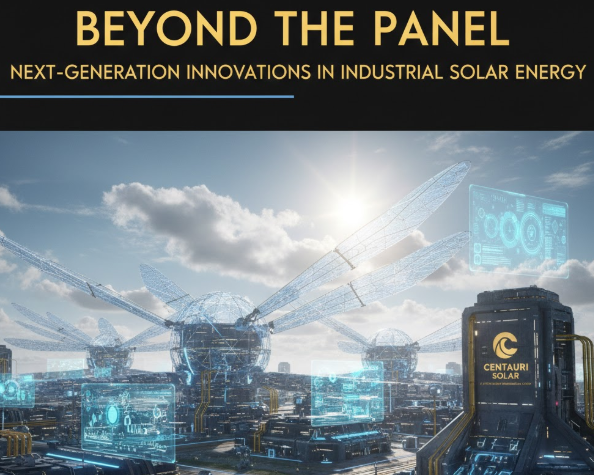
Industrial solar energy has come a long way from simple photovoltaic installations. What was once a niche renewable energy solution has become a cornerstone of global decarbonization, with innovation accelerating at an unprecedented pace. At the forefront of this transformation is centauri solar, a division of Centauri Renewable Corp focused on advancing solar technologies that go beyond traditional panels. These next‑generation innovations are redefining how industries harness, store, and optimize solar energy for large‑scale power generation, sustainability goals, and operational resilience.
Solar power’s global footprint continues to expand rapidly. In 2025, global solar capacity increased by 23%, reaching a total of 618 GW, driven by demand across regions as diverse as Africa, Asia, and North America. This growth was propelled in part by lower costs for solar modules and batteries — with battery storage costs falling from $144 to $112 per kilowatt‑hour between 2023 and 2025 — making solar more accessible and economically competitive than ever before.
Industrial solar isn’t just about generating electricity anymore. It’s about boosting efficiency, integrating innovative materials, and creating systems that work under real‑world constraints — even at night or under heavy cloud cover. This article explores the technologies pushing solar energy into its next era and how centauri solar is helping shape that future.
High‑Efficiency Photovoltaics: Pushing the Limits of Conversion
One of the most critical drivers of innovation in industrial solar energy is increasing the efficiency at which sunlight is converted into usable electricity. Traditional silicon‑based panels typically convert between 20 % and 25 % of sunlight into power. However, new approaches are rapidly surpassing these limits. For instance, perovskite‑silicon tandem solar cells have achieved laboratory efficiencies exceeding 34.6 % — a dramatic improvement over conventional panels and a potential game‑changer for industrial deployments where space and yield are critical.
Meanwhile, multi‑junction solar cells — which layer multiple semiconducting materials to absorb a broader range of sunlight wavelengths — have demonstrated efficiencies above 46 % under concentrated sunlight in laboratory settings. These kinds of breakthroughs promise to shrink the footprint of industrial solar farms while producing more power per unit area, making solar a more viable option for utility‑scale energy generation.
Through initiatives like https://centauricorp.us/solar-innovation/, centauri solar participates in research that pushes these next‑generation technologies toward real‑world applications — improving productivity, durability, and return on investment for industrial energy users.
Advanced Energy Storage: Power When the Sun Isn’t Shining
A major challenge for solar power has always been intermittency — solar panels only generate electricity when the sun shines. Next‑generation industrial solar systems address this challenge by integrating advanced energy storage solutions that help deliver power even after sunset.
Long‑duration storage technologies, such as large‑scale battery systems and thermal storage solutions, are now enabling “24/7 solar” operations. For example, Australia’s RayGen project combines a 4 MW solar array with a 50 MWh thermal‑hydro storage system that can dispatch power for up to 17 hours, effectively transforming solar resources into reliable, on‑demand electricity for industrial grids.
Beyond batteries, thermal storage systems concentrate sunlight and store heat, allowing industries to use solar energy for high‑temperature processes or night‑time electricity generation — a breakthrough for sectors like manufacturing, mineral processing, and green fuel production.
These storage technologies make solar a dispatchable power source — an essential feature for industrial energy strategies seeking low carbon footprints without sacrificing reliability.
Smart Integration and Digital Optimization
The future of industrial solar also depends on intelligent management. Integrating solar arrays with smart inverters, IoT sensors, and AI‑powered energy management platforms enables real‑time optimization of energy production, storage, and consumption. These systems can forecast sunlight availability, reroute energy flows, and balance loads automatically to maximize efficiency while reducing operational costs.
AI and machine learning are playing key roles in predictive maintenance as well, helping operators identify potential panel failures or performance degradation before they happen — a critical capability for industrial environments where uptime is vital.
By embracing data‑driven energy management, industrial solar plants become more than power producers — they become intelligent energy ecosystems capable of adapting to weather patterns, grid conditions, and shifting demand cycles with minimal human intervention.
Innovative Applications: Solar Beyond Earth and Industry
Industrial solar innovation isn’t limited to Earth. Centauri Renewable Corp has roots in aerospace research and draws inspiration from space technology to push solar capabilities further. The development of solar cells designed to operate under harsh conditions — from deserts to orbital habitats — requires materials and designs that prioritize durability and reliability.
These ruggedized solar systems are not only applicable for space missions but also industrial settings on Earth where conditions may be extreme — such as remote mining operations, agricultural holdings, or coastal industrial hubs prone to extreme weather.
Additionally, new solar concepts like StratoSolar — a system that lifts solar collection platforms into the stratosphere to capture more consistent sunlight above cloud cover — hint at radical future directions for industrial and even global power generation.
Sustainability and Circular Technology
Industrial solar innovation also involves improving sustainability across the entire lifecycle of solar systems. Recycling old panels to recover silicon and other materials, repurposing them into new energy solutions, and integrating solar reforming technologies to produce green fuels are all part of a growing circular energy ecosystem.
This circular view not only reduces environmental impact but also aligns with broader ESG (Environmental, Social, and Governance) goals — increasingly important for industrial energy stakeholders and investors.
Commercialization and Global Influence
The innovations outlined above are not just theoretical. Collaborative efforts between organizations like Energy America, NASA, and centauri solar are actively driving commercialization of next‑generation technologies. For example, a joint effort between Energy America and Centauri aims to bring more efficient solar cell designs to market, with commercialization expected within the next year.
Energy America itself has delivered over 40 GW of solar capacity worldwide and continues to expand state‑of‑the‑art solar modules into global markets. This progress highlights the jump from lab‑scale innovation to real industrial impact — where advanced solar technologies power factories, data centers, and entire utility grids.
Conclusion: The Solar Revolution Continues
The future of industrial solar energy extends far beyond traditional photovoltaic panels. Breakthrough advancements in high‑efficiency solar cells, long‑duration energy storage, digital optimization, and space‑inspired technologies are transforming the landscape of renewable power. With centauri solar driving forward‑looking solutions found at https://centauricorp.us/solar-innovation/, industries around the world are gaining access to reliable, efficient, and sustainable solar energy systems capable of meeting today’s demand and tomorrow’s challenges.
Innovation in solar isn’t just about capturing sunlight — it’s about creating resilient, intelligent, and adaptable systems that can power the industrial world for generations to come.
0 Comments
Categories
- blog 968
Recent posts
Complete Guide To UG38 System
Sat, 18 Apr 2026

Why OLYMPUS88 is Redefining the Online Casino Experience
Fri, 17 Apr 2026

Leave a comment