Inspirational journeys
Follow the stories of academics and their research expeditions
How to Prepare for the CFA Course Level-Wise Strategy Guide?

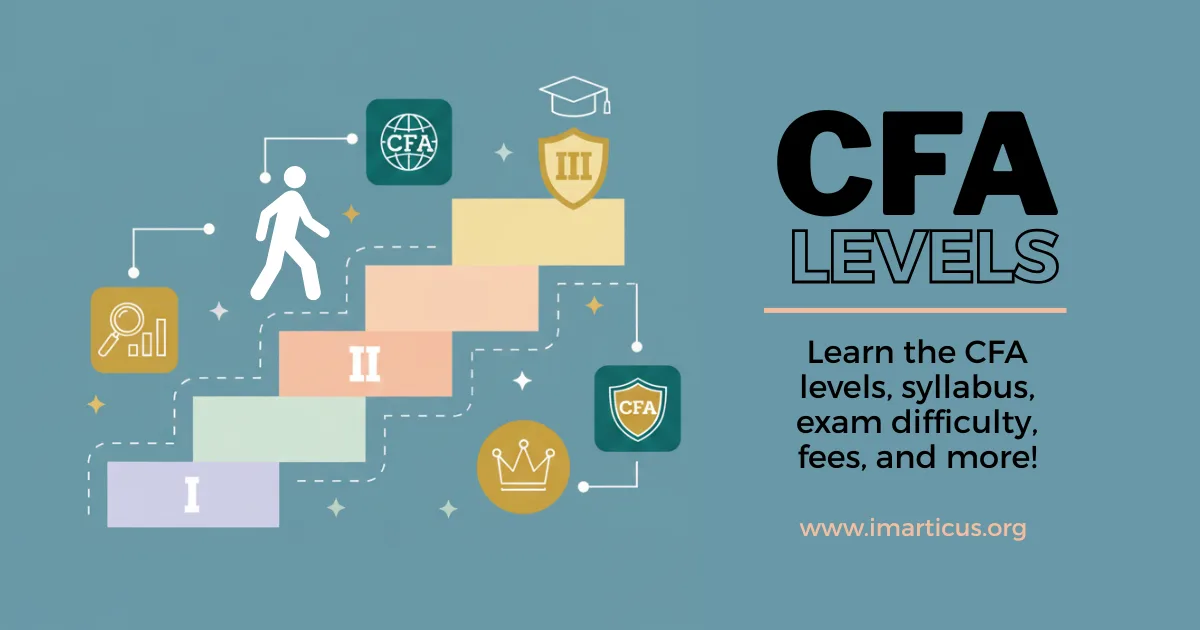
The CFA course is well-known as one of the most difficult professional credentials for finance professionals. It requires solid concepts and a study plan according to your level. There is an evaluation of different skill sets depending on levels, ranging from basic information at level one to Application at level two, finally culminating in case study skills for portfolio management at level three; therefore, there is no identical study plan for you.
By using a level-by-level strategy in preparing for tests, it is possible to cover a wide range of topics in a curriculum. As you organize your study plan, taking into consideration the test format for each level, you can enhance your retention level, confidence, and pass probability for the CFA full form - Chartered Financial Analyst.
CFA Course: Key Strategies to Streamline Exam Prep With Confidence
A) CFA Level 1 - Build Strong Foundations
1. Master Concepts Before Memorization
Level 1 tests your grasp of fundamental ideas over a broad curriculum. Rather than learning equations by heart, it is important to emphasize understanding why there is a particular concept, particularly within Ethics, FRA, and Economics. Having an appreciation of relationships between ideas will help make things easier to retain.
Leverage simple examples and real-world analogies to clarify complex ideas! Revisit topics several times by using spaced repetition so concepts stay fresh. This approach ensures you handle both straightforward and tricky conceptual questions under exam pressure.
2. Practice Questions Early and Consistently
Level 1 of the CFA full form - Chartered Financial Analyst questions are straightforward and time-sensitive. Begin solving practice questions soon after completing each topic rather than waiting until the end. Early exposure helps you to identify weak areas and determine how concepts are tested.
Prioritize CFA Institute’s practice questions and mock exams, as they reflect the exam style. Review the incorrect answers carefully, not just what went wrong, but why? This approach improves confidence and accuracy.
3. Ethics Should Be a Daily Habit
A good knowledge of Ethics is crucial in Level 1, and in borderline cases, it can be the decider. Rather than cramming all your Ethics in at the end of your preparation, make sure you study regularly. Daily exposure enhances interpretation and judgment-based thinking.
Moreover, practice Ethics questions thoughtfully. Over time, this builds intuition, helping you select the most accurate answer rather than just a technically correct one.
B) CFA Level 2 - Apply and Analyze Deeply
1. Focus on Application, Not Coverage
Level 2 of CFA full form - Chartered Financial Analyst shifts from breadth to depth, examining how well you apply concepts in complex situations. Reading alone is insufficient - each concept must be reinforced with case-based problem-solving. Subjects such as Equity, Fixed Income and Derivatives (FRA) need deeper analytical thinking.
Furthermore, break down each topic - determine context, identify what is being examined and then apply the relevant formula or logic.
2. Master Calculations and Interpretation
Calculations in the CFA course Level 2 are detailed and combined with interpretation! Memorizing formulas without determining inputs and outputs often leads to confusion during exams. Instead, prioritize how formulas behave under varied assumptions.
After each practice set, evaluate numerical errors and interpretation mistakes. Being aware of why one valuation technique is preferred over another is as essential as computing the correct number.
3. Create a Strong Review System
Seeing the intensity of Level 2 content, it is common to forget earlier topics. Hence, it is crucial to build a structured review plan that revisits key formulas, concepts and complex/tricky areas per week. Short and frequent reviews are more effective than last-minute marathons.
Leverage summary notes, formula sheets and flashcards customized to your weak spots. This consistent revision approach makes sure your retention increases as the exam date approaches.
C) CFA Level 3 - Think Like a Portfolio Manager
1. Master Constructed Response (Essay) Technique
Level 3 of the CFA course is unique due to essay-style questions! Even if you know the answer, poor structure can cost marks. To avoid such a scenario, practice writing concise, direct responses by using bullet points and command words such as justify, calculate, or recommend.
Moreover, time management is essential - learn to answer exactly what is asked and nothing more. Practising past essay questions under the specific timed conditions helps you refine clarity, speed, and accuracy.
2. Integrate Concepts Across Topics
Unlike previous CFA levels, Level 3 examines your ability to integrate multiple concepts in a cohesive portfolio strategy. Asset allocation, tax consideration, risk management and behavioural finance appear together.
Moreover, you need to take a comprehensive approach to the subjects studied in your tests. This could include considering implications and overlap between subjects. This helps you link your preparation to the questions being tested.
3. Ethics and GIPS Are High-Scoring Areas
Ethics & GIPS are critical in Level 3. These are scoring-friendly if done correctly. Application knowledge rather than knowing them by heart is essential.
In addition, you should attempt practice questions in a scenario-based format to hone your judgment and compliance reasoning skills. Through regular practice, it improves your overall scoring in the exam and serves as a safety net for you in some problematic areas.
Conclusion
Passing the CFA exam is all about learning smarter at all levels!” By synchronising your approach to CFA course prep with the unique requirements of levels one, two, and three, you would increase your success. Contact the Zell Education experts for more information on the CFA program.
FAQs
1. How many months are enough to prepare for the CFA course?
Ideally, it will take around 6 to 9 months per level, achieving well over 300 focused hours.
2. Which CFA level requires the most skill assessment?
Most candidates find Level 2 the most difficult because of the item-set questions it poses.
3. Are mock exams vital?
Yes, mocks build exam temperament and highlight weak areas.
0 Comments
Categories
- blog 968
Recent posts
Complete Guide To UG38 System
Sat, 18 Apr 2026

Why OLYMPUS88 is Redefining the Online Casino Experience
Fri, 17 Apr 2026

Leave a comment