Inspirational journeys
Follow the stories of academics and their research expeditions
How Teams Qualified for FIFA World Cup 2026

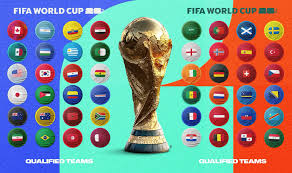
The landscape of international football is undergoing its most significant transformation in decades. As we look toward the world cup 2026, the tournament is set to break records not only in its scale but also in its inclusivity. For the first time in history, the FIFA World Cup will feature 48 teams, expanding from the previous 32-team format that had defined the competition since 1998. This expansion has fundamentally altered the qualification pathways for nations across every continent, creating new opportunities for emerging footballing powers while intensifying the stakes for traditional heavyweights. Understanding how these teams navigate the complex qualification processes is essential for any fan eager to follow the road to the greatest sporting event on the planet.
The Expansion: Why the Format Changed
The decision to expand to 48 teams for the world cup 2026 was driven by FIFA’s desire to globalize the game and provide more opportunities for member associations that were previously on the periphery of qualification. With 16 additional slots available, the distribution of berths was adjusted to ensure a balanced representation across all six confederations.
The new allocation is as follows:
AFC (Asia): 8 slots + 1 intercontinental playoff slot
CAF (Africa): 9 slots + 1 intercontinental playoff slot
CONCACAF (North/Central America): 6 slots (including 3 hosts) + 2 intercontinental playoff slots
CONMEBOL (South America): 6 slots + 1 intercontinental playoff slot
OFC (Oceania): 1 slot + 1 intercontinental playoff slot
UEFA (Europe): 16 slots
The Qualification Pathways by Confederation
AFC and CAF: Increased Representation
In Asia, the qualification process has been streamlined into a multi-stage tournament that rewards consistency. With eight guaranteed spots, the AFC has seen increased competition, allowing nations that historically struggled to bridge the gap to compete at the highest level. Similarly, Africa has adopted a revamped group stage system for the world cup 2026, where the winners of nine groups automatically qualify, ensuring that the continent’s immense talent pool is better represented on the world stage.
UEFA: Maintaining the High Bar
Europe remains the most competitive confederation. With 16 direct slots, UEFA has maintained a rigorous qualification structure. Teams are divided into groups, and while the format remains brutal for smaller nations, the expansion provides a slight cushion for those aiming to join established powerhouses like France, Germany, and Spain.
CONCACAF: The Host Advantage
As the world cup 2026 will be hosted across Canada, Mexico, and the United States, these three nations received automatic qualification. This necessitated a unique qualification path for the remaining CONCACAF teams, who are now competing for the remaining three direct spots and two intercontinental playoff berths. This dynamic has made every match in the region critically important for teams looking to secure their place in North America.
The Intercontinental Playoff Tournament
One of the most exciting innovations for this cycle is the new Intercontinental Playoff Tournament. This event will feature six teams from across the globe competing for the final two spots in the world cup 2026. By including one team from every confederation except UEFA, plus an additional team from the host confederation, FIFA has created a high-stakes mini-tournament that serves as a thrilling precursor to the main event.
Conclusion
The qualification process for the world cup 2026 represents a bold step forward for global football. By expanding the field to 48 teams, FIFA has ensured that the tournament is more representative, more competitive, and more accessible to fans across every continent. From the grueling group stages in Asia and Africa to the high-pressure playoffs in South America and the innovative intercontinental tournament, the path to the finals is a journey defined by resilience and skill. As the final qualified nations are confirmed, the excitement surrounding the tournament continues to build, promising a summer of football that will truly be a celebration of the world’s most popular sport. Whether you are a casual observer or a dedicated analyst, the road to 2026 is a testament to the growth and enduring spirit of international competition.
0 Comments
Categories
- blog 2168
Recent posts
Essential SEO Practices for Growing an Online Gaming Business
Sun, 18 Oct 2026


Leave a comment