
How to Move With Kids: A Stress-Free Guide for Families
Sat, 24 Oct 2026

Follow the stories of academics and their research expeditions
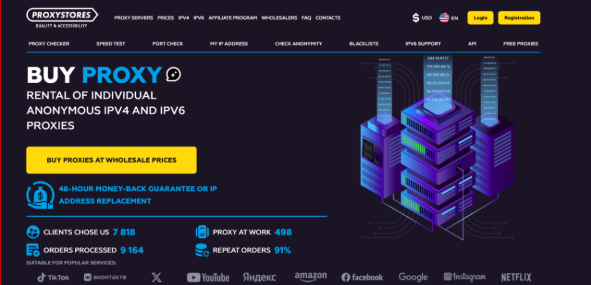
Review scope: pricing and specifications are treated as a provider-published snapshot. Confirm the live checkout and current terms before ordering. Long-term performance figures are not claimed unless independently measured.
Official service: ProxyStores official English website
ProxyStores sells several fixed-proxy categories, but a feature list does not explain which one makes sense for a specific job. I therefore structured this review around three common buyer scenarios: an e-commerce operator checking regional storefront behavior, a social-media team managing browser sessions, and a market-research team collecting public information from multiple countries. Each scenario rewards a different balance of cost, exclusivity and compatibility.
The provider-published pricing is attractive, especially for short rental periods, but I treat those numbers as the beginning of the decision rather than the conclusion. I did not run an independent long-duration throughput benchmark. My evaluation focuses on workflow fit, setup discipline, target-specific testing and the operational trade-offs that appear when fixed proxies become part of a business process.
An e-commerce team may want to verify currency, shipping rules, stock messages, regional promotions and checkout availability from another country. For those tasks, a fixed proxy is useful because it gives the operator a repeatable location instead of a constantly changing exit IP.
I would begin with a small quantity and test the exact storefronts. First confirm the visible IP and country. Then open the same product page from a clean browser state, record the currency and availability, and compare the result with another endpoint in the same region. If the site behaves differently across two addresses, the team should not assume the proxy is wrong; the difference may come from cookies, inventory rules, language or the website's own personalization.
For ordinary public checks, shared IPv4 can be a cost-effective choice. If the team needs a stable environment for repeated sessions or login-based testing, individual IPv4 gives cleaner ownership and fewer unknowns.
Social-media workflows are more sensitive because a proxy does not operate in isolation. A platform can evaluate the address together with browser fingerprint, account history, cookies, device characteristics and behavior. That means a proxy provider cannot guarantee account safety simply by selling a stable IP.
My approach would be conservative: one individual IPv4 per important browser profile, one region that matches the intended account context, and no unnecessary switching between addresses. I would record the assignment so another operator does not accidentally reuse the same endpoint. If the team uses an anti-detect browser, I would verify proxy compatibility in a test profile before connecting a valuable account.
Shared IPv4 can work for lower-stakes public browsing, but I would avoid it for sensitive long-lived sessions because another customer's behavior can influence reputation. This is not a ProxyStores-specific problem; it is the trade-off that comes with any shared exit address.
Market research often values breadth and cost efficiency. A team may need to compare search results, prices, public listings or localized pages across several countries. Here, shared IPv4 or low-cost individual IPv4 can make sense depending on the destination and how much repeatability is needed.
I would design the collection process around modest concurrency, logging and rate limits. Each request should record which endpoint was used and what error occurred. That helps separate proxy failures from target-side limits. When a target returns a 403, 429 or unexpected redirect, blind retries are a bad idea. Pause, diagnose the reason and decide whether the destination permits the intended collection method.
IPv6 can be appealing for technical research because of the low price, but compatibility is the gating factor. Before buying a block, test the actual websites and software. A cheap protocol that the target cannot use is not a bargain.
Proxy type | 5 days | 30 days | 90 days | 360 days |
IPv4 Shared | $0.67 | $0.99 | $2.97 | $11.88 |
Individual IPv4 (1-20) | $0.96 | $1.77 | $5.31 | $21.24 |
IPv6 /32 (1-99) | $0.10 | $0.51 | $1.53 | $6.12 |
MTProto (1-20) | $0.96 | $1.77 | $5.31 | $21.24 |
ProxyStores' pricing structure supports a useful buying pattern: five-day tests before longer commitments. That matters because fixed-proxy performance is destination-specific. An address that works perfectly for one market-research site may perform poorly on another. A short term gives the buyer time to check real targets while replacement or refund rules are still relevant.
I would not compare plans only on cost per IP. Compare them on cost per successful workflow. Individual IPv4 costs more than shared IPv4, but if the extra exclusivity reduces session resets or troubleshooting, it may be the cheaper operational choice. Conversely, paying for dedicated addresses across a large set of one-off public checks may waste budget.
My acceptance test is simple. I verify authentication, apparent country, protocol support and target-site behavior. Then I repeat the same actions after a short interval to check consistency. For browser work I also verify DNS behavior and compare the profile's time zone and language with the intended region. For scripts I log status codes and response times so I have evidence rather than impressions.
The provider also presents tools such as proxy checking, speed testing, port checking, anonymity checks and blacklist utilities. Those are useful diagnostics, but they should not replace testing the business application itself.
For web-only tasks, HTTP(S) proxies are straightforward and widely supported. SOCKS5 is useful when an application needs broader TCP handling or when a tool expects SOCKS syntax. I would choose one protocol per project and document it. Mixed configurations create avoidable support problems when different operators interpret the same proxy differently.
Authentication details should also be stored in a secure team system rather than copied through chat. If access is based on username and password, rotate credentials according to the provider's options and internal security policy.
Country targeting is essential for all three scenarios in this review, but the country is only one signal. City, ASN, IP classification and the website's own location database can influence results. If a campaign depends on a particular city or carrier type, I would confirm inventory before purchase.
For e-commerce and market research, I like to test at least two endpoints per important country. If both produce the same regional behavior, confidence increases. If they do not, the team should investigate before converting the observation into a business decision.
E-commerce QA teams can start with shared IPv4 for public comparisons and move to individual IPv4 where stable sessions matter. Social-media teams should generally prefer individual IPv4 for valuable long-lived browser profiles. Market researchers can mix shared and dedicated endpoints based on the sensitivity of each target. IPv6 is best treated as a separate compatibility project rather than a default replacement for IPv4.
MTProto is specialized and relevant primarily when the application specifically calls for it. It should not be treated as a general web proxy simply because its price appears alongside the other plans.
The advantages are clear: low entry cost, short rental periods, dedicated and shared choices, IPv6 availability, familiar protocols and a toolset that supports basic validation. The limitations are equally important: shared reputation is not exclusive, some destinations may treat datacenter networks differently, IPv6 compatibility varies, and no generic proxy benchmark can guarantee behavior on every target.
It can be, especially for public regional pages and localization checks. The exact storefronts should be tested because websites can treat hosting IPs differently.
Technically a tool may allow it, but for important profiles I prefer one stable individual address per profile to reduce cross-account overlap and simplify troubleshooting.
Yes. They are a practical way to test target compatibility, country behavior and software integration before committing to a longer rental.
ProxyStores is most useful when the buyer matches the proxy type to the use case instead of searching for one universal plan. Shared IPv4 suits inexpensive public checks, individual IPv4 is the stronger choice for persistent sessions, and IPv6 is valuable when compatibility has been proven. For e-commerce, social media and market research alike, the best strategy is to start small, validate the real destinations and expand only after the workflow behaves consistently.
Before purchasing, compare the current ProxyStores pricing and plan details with the workload and location requirements described above.
Final live-check link: ProxyStores review 2026 - official servic
Sat, 24 Oct 2026
Sat, 24 Oct 2026
Sat, 24 Oct 2026

Start learning with Acadomi! Explore thousands of affordable courses on any topic, anytime, and anywhere. Join our community and unlock your potential today!
Leave a comment