Inspirational journeys
Follow the stories of academics and their research expeditions
The First-Generation Student Experience: Navigating Higher Education Without a Family Roadmap

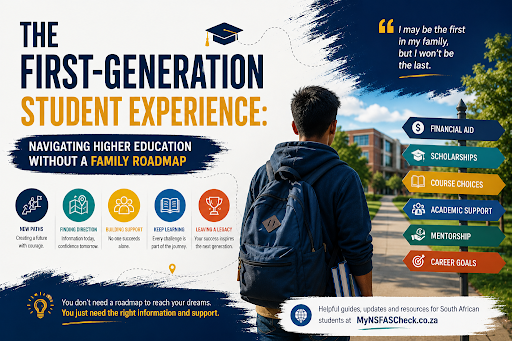
Entering university or college is a significant milestone for any student. However, for those who are the first individuals in their families to pursue higher education, the experience can bring challenges that extend beyond attending lectures and completing academic work.
First-generation students often have to learn how the higher-education system operates while simultaneously working to achieve academic success. They may need to understand university applications, financial aid, accommodation, course selection, academic expectations and future career planning without guidance from parents or close family members who have already gone through these experiences.
This does not mean that first-generation students are less intelligent, ambitious or capable than others. Rather, it highlights the importance of accessible information and strong student-support systems in helping them successfully navigate higher education.
What Does It Mean to Be a First-Generation Student?
A first-generation student is generally someone who is among the first people in their immediate family to attend a university, college or another higher-education institution. The exact definition can vary between countries and institutions, but the overall experience is often similar: the student is entering an educational environment that may be unfamiliar to their family.
Because of this, questions that may seem straightforward to families with previous university experience can become major sources of uncertainty.
How does the university application process work? Which qualification should a student choose? What financial support is available? How does course registration take place? Where can students find academic assistance? What should they do when they struggle with a particular subject?
For many first-generation students, finding trustworthy answers to these questions requires additional research, time and confidence.
The Information Gap as a Hidden Barrier
One of the biggest challenges experienced by first-generation students is not a lack of ability or determination. Instead, it is often a lack of familiarity with the systems and processes connected to higher education.
Students whose parents or relatives have attended university may receive informal guidance about choosing courses, communicating with lecturers, meeting academic deadlines or applying for financial support. First-generation students may need to discover and understand these processes independently.
This situation can create what is commonly known as an information gap.
Although the internet has made educational information more accessible, students may still find important details scattered across university websites, government portals, scholarship organisations and student-support platforms.
In South Africa, for example, understanding financial support can be an important part of preparing for higher education. The National Student Financial Aid Scheme (NSFAS) provides financial assistance to eligible students studying at public universities and TVET colleges. However, students may still need to understand application requirements, eligibility conditions, funding decisions, allowances and other related procedures.
Educational information platforms such as My Nsfas can provide additional guidance to help students better understand NSFAS-related processes while encouraging them to consult official sources for accurate and updated information.
Financial Uncertainty and Its Effect on Education
Financial concerns are another major challenge for students entering higher education without previous family experience to guide them.
The cost of studying includes much more than tuition fees. Students may also need to plan for accommodation, transport, food, textbooks, internet access, electronic devices and other daily expenses.
Financial pressure can directly influence a student's academic experience. A student who is worried about paying for accommodation or travelling to campus may find it difficult to focus entirely on lectures, assignments and examinations.
For this reason, scholarships, bursaries and financial-aid programmes can play an important role in increasing access to higher education and helping students continue their studies.
However, financial assistance is most beneficial when students clearly understand what support is available, how they can qualify and what responsibilities come with receiving financial aid.
Selecting a Qualification Without Family Guidance
Another challenge can arise before a first-generation student even begins university or college.
Choosing a qualification is an important decision, particularly for students who do not have family members with experience in higher education or specific professional fields. A student may know which school subjects they enjoy but have limited information about university qualifications, career opportunities and possible employment paths.
Schools, universities, career advisers and educational organisations can help reduce this uncertainty by making information about careers and qualifications easier to access and understand.
Students may find it useful to consider questions such as:
What career opportunities can this qualification provide?
Which subjects and entry requirements are necessary?
What will the programme cost?
Are bursaries, scholarships or financial-aid options available?
Can this qualification provide opportunities for further study?
What practical and professional skills will be developed?
Making these decisions with access to reliable information can help students feel more confident and choose programmes that are better aligned with their personal interests and future career goals.
Learning How University Life Works
Once students begin university or college, they enter another important stage of learning and adjustment.
Higher education often requires students to become more independent. They may be responsible for managing their schedules, communicating directly with lecturers, monitoring assignment deadlines and seeking support when they experience academic or personal difficulties.
For first-generation students, these expectations may initially feel unfamiliar or challenging.
This is why orientation programmes and student-support services are especially important. Academic advisers, tutors, librarians, counselling professionals and student organisations can provide information and assistance that students may not always have available at home.
Most importantly, seeking help should never be viewed as a weakness. Recognising when support is needed and understanding where to find it are valuable skills for succeeding in higher education.
Technology Can Increase Access, but Accessibility Matters
Digital technology can make higher education easier for first-generation students to understand and navigate. Online learning platforms, university portals, digital libraries and educational websites allow students to access important resources without relying entirely on in-person assistance.
However, technology can also introduce new challenges.
Not every student has reliable internet access, an appropriate computer or smartphone, or sufficient mobile data to participate consistently in online learning. Therefore, an education system that increasingly depends on digital technology must also address affordability and accessibility.
Universities and colleges can support students by providing computer facilities, dependable campus internet, digital learning tools and technical assistance.
Students can also benefit from developing essential digital skills, including finding reliable information, managing online accounts, submitting assignments through digital platforms and protecting personal information online.
Building a Strong Support Network
A reliable support network can greatly improve the higher-education experience of a first-generation student.
Support does not have to come from only one person. Lecturers, academic advisers, classmates, mentors, student organisations, family members and online educational communities can all provide valuable information, guidance and encouragement.
Peer support can be particularly valuable because students facing similar challenges can share information, discuss their experiences and motivate one another.
Mentorship programmes can also make a meaningful difference by connecting students with people who have already experienced higher education. A mentor can help explain what students should expect and provide guidance about situations that might otherwise feel confusing or unfamiliar.
Opportunities to Improve Student Support in South Africa
The higher-education environment in South Africa shows why student support should extend beyond the admission process.
Financial-aid programmes such as NSFAS Application can help eligible students manage financial barriers, while universities and TVET colleges provide academic and institutional support. Digital platforms can further improve access by making important information easier for students to locate and understand.
However, there is still an opportunity to make the overall student journey simpler and more accessible.
Students should be able to find clear and understandable information about university applications, financial assistance, accommodation, academic resources and career opportunities without having to search across numerous disconnected platforms.
The goal should not simply be to help students enter higher education. It should also be to help them navigate, complete and gain the full benefit of their educational journey.
Creating a Clearer Roadmap for Future Generations
First-generation students should not be expected to learn everything about higher education through trial and error.
Reinforcing core reading and study skills earlier, through options such as an online reading tutor when a student starts falling behind, can also make that eventual jump to university-level coursework feel less unfamiliar. Governments and financial organisations can make funding information clearer and easier to access. Technology can also help make important educational resources available to a larger number of students.
Educational websites and online communities have an important role as well by explaining complicated educational processes in clear and practical ways.
Ultimately, being the first person in a family to attend university or college should be recognised as an important achievement rather than becoming an information disadvantage.
A student's family background should not determine how easily they can understand and navigate higher education. With accessible financial support, trustworthy information, digital resources, mentorship and effective institutional assistance, first-generation students can build their own educational path while creating new opportunities for future generations.
0 Comments
Categories
- blog 2168
Recent posts
Essential SEO Practices for Growing an Online Gaming Business
Sun, 18 Oct 2026


Leave a comment